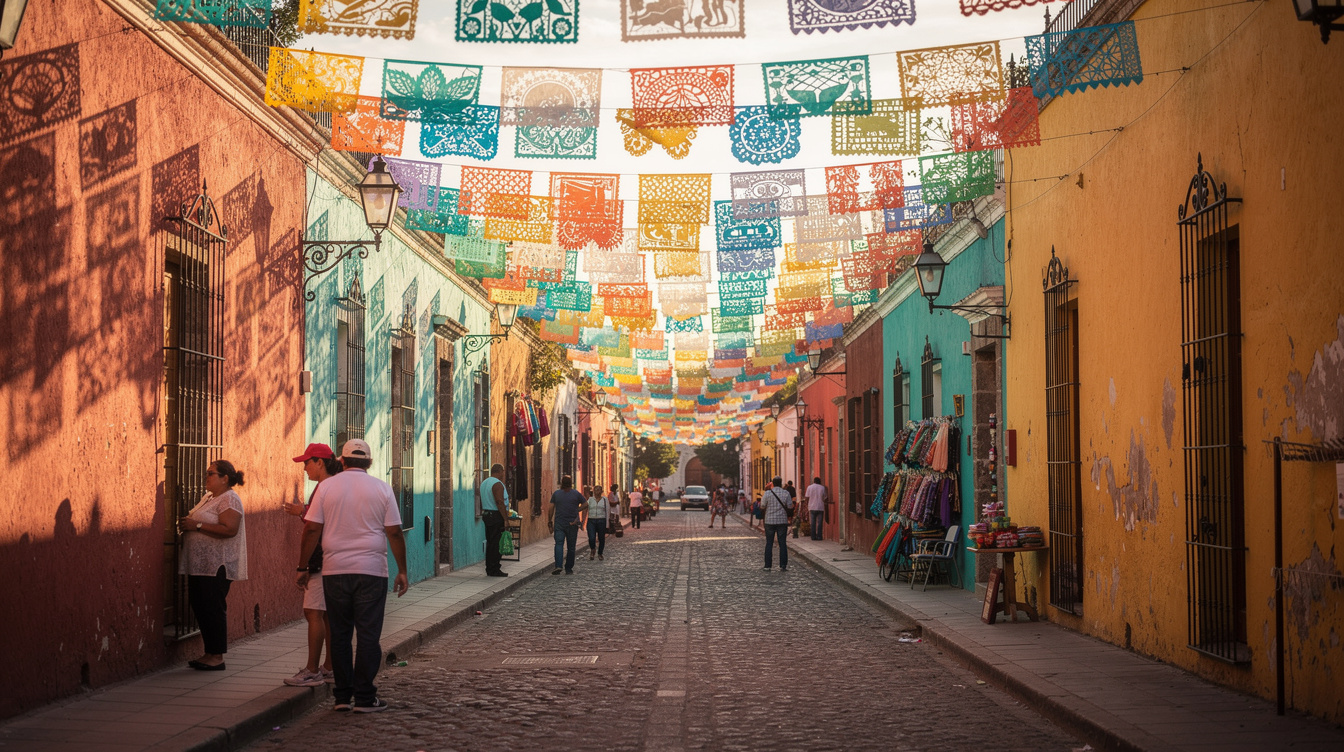
Mexico digital nomad visa
Mexico never created a dedicated nomad visa — it didn't need one. The Temporary Resident Visa gives remote workers up to four years of legal residence on an income or savings test, and Mexico City, Oaxaca, and the coasts already host one of the world's largest nomad populations.
Temporary Resident Visa at a glance ✓ Verified Jul 2026
- Income required
- $4300/mo
- Visa cost
- $55
- Length of stay
- 48 months
- Processing
- 1–4 weeks
- Official source: consulmex.sre.gob.mx · Verified Jul 2026
Requirements
- Proof of solvency: monthly income (roughly $4,000–4,500, consulates vary) over the last 6 months, OR savings around $70,000+ over 12 months
- Application starts at a Mexican consulate outside Mexico — requirements and thresholds genuinely differ by consulate
- Valid passport and consulate-specific documentation
- After entry, exchange the visa for the resident card at the INM office within 30 days
- Remote income from abroad; working for Mexican employers requires work permission
How to apply
- Pick your consulate strategically — thresholds and appetite vary; book the appointment
- Present income/savings statements, passport, photos at the interview
- Receive the visa, enter Mexico within 180 days
- Complete the canje at INM within 30 days of entry to get your 1-year resident card
- Renew in-country for up to 3 more years, then convert to permanent residency
Renewal and long-term stay
- Renewable: yes, up to 4 years in total
- Path to permanent residency: yes, after 4 years of residence
- Path to citizenship: yes, after 5 years
Issued for one year, then renewable for one, two or three more — four years total as a temporary resident, after which you can convert to permanent residency. This is one of the few nomad-friendly routes that genuinely settles you: naturalisation needs five years of legal residence immediately before applying and temporary-resident time counts toward it, or just two years for nationals of Latin American countries, Spain and Portugal. Expect a Spanish language and Mexican history exam.
Bringing a partner or children
- Dependants: yes — a partner and children can be included
A spouse and children can accompany you, with a higher income threshold and extra paperwork — marriage and birth certificates, generally apostilled. Mexico's family-unity provisions are well-trodden, which makes this one of the more predictable family routes in the dataset.
Tax
- You become tax resident: after 183 days in the country
- Foreign income taxed locally: yes — taxed once you become tax resident
- Special nomad or expat tax regime: no — ordinary resident rates apply
No nomad-specific break. Mexico taxes residents on worldwide income at progressive rates, and residency turns less on a day count than on where your 'centre of vital interests' sits — establishing a home and life here can make you resident even without an obvious 183-day trigger. If you take the four-year temporary-residency route seriously, assume you will be filing in Mexico.
This summarises published rules, not your situation, and it is not tax advice. Two things it can't tell you: your home country may tax you anyway — US citizens are taxed on worldwide income wherever they live — and day-count is only the most common trigger for tax residency, not the only one. Having a permanent home, a family or your centre of economic interests in a country can make you resident well before the day count does. Get advice before you move.
Moving abroad means more than the visa — sort your travel insurance (many visa applications require proof of coverage), set up borderless banking, and land with data working.
First nomad visa? Our digital nomad visa guide explains how qualifying, applying, and taxes work across every country.
Frequently asked questions
Why do requirements differ between Mexican consulates?
Consulates apply the financial criteria with real discretion — minimums, documents, even whether they accept remote-work cases vary. Nomad forums track which consulates are currently straightforward; check recent reports before booking.
Can I stay in Mexico as a tourist instead?
Tourist entries (FMM) can grant up to 180 days, but immigration officers increasingly stamp fewer days, and back-to-back tourist runs draw scrutiny. For anything beyond a season, temporary residency is the durable answer.
Does temporary residency lead to permanent status?
Yes — after four years of temporary residency (or two if married to a Mexican citizen) you can convert to permanent residency, which has no renewal requirement.
More visas in Americas
Antigua and Barbuda
Nomad Digital Residence
Argentina
Digital Nomad Visa
Bahamas
BEATS (Extended Access Travel Stay)
Barbados
Welcome Stamp
Visa rules, income thresholds, and fees change — always confirm the current requirements on the official government source (linked here) before applying. This page is informational, not immigration advice. See how we verify this data — and tell us if something here is out of date.