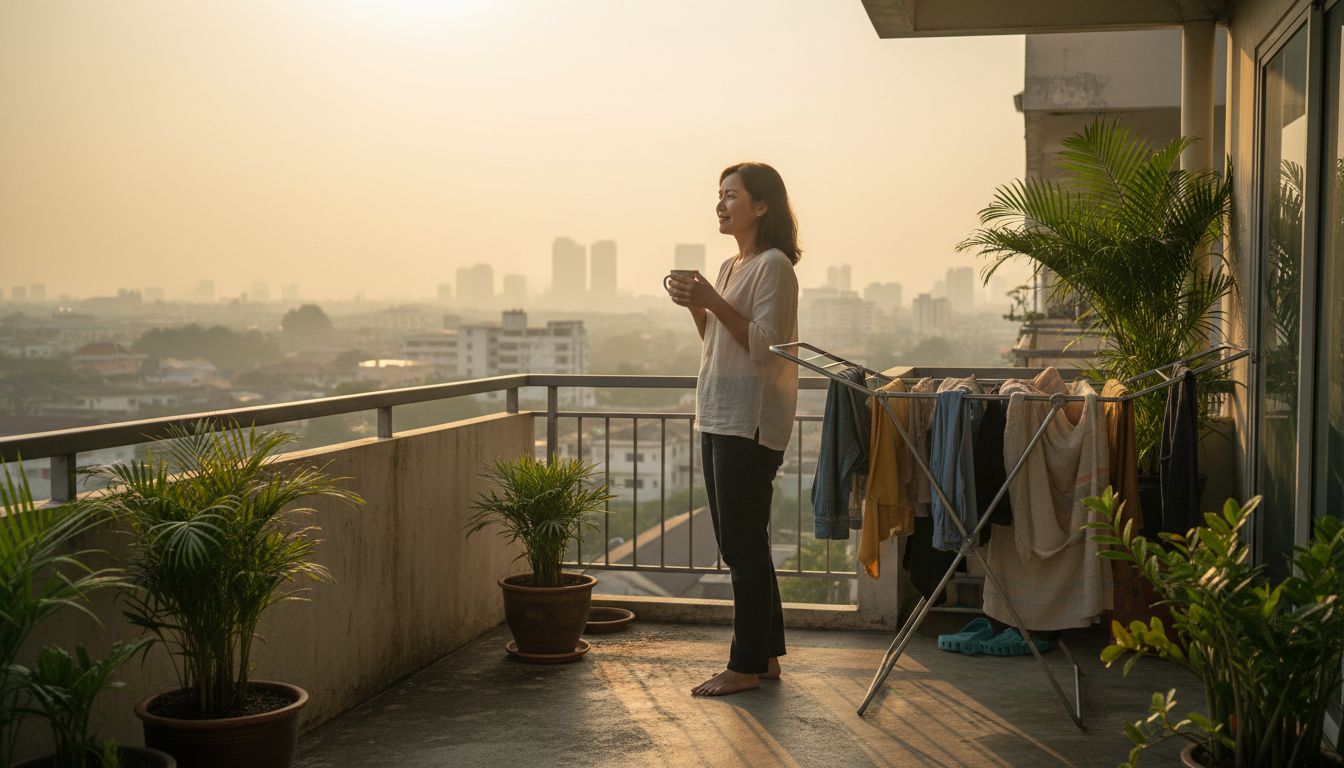
Bangkok
Thailand's capital and where most of its long-stay routes actually get spent. The visa decides whether you can be here; the 180-day count decides what the year costs.
- Best months
- Nov – Feb
- Hardest months
- Mar – May
- Getting around
- BTS and MRT
- Neighbourhoods
- 5 compared
- Visa
- Country-issued
- Cost data
- 1 of 3 lines sourced
The Bangkok guide
Bangkok is decided by a map, and it is not the map of the city. It is the two train lines. Where you live relative to a BTS or MRT station determines whether your day contains twenty minutes of transit or ninety, and no amount of rent saved in a good building compensates for being off the line. Almost everything else about living here — what you pay, who you meet, whether you like it — follows from that one choice.
Thailand issues the permission to be here, not Bangkok — the city does not change what you are allowed to do. Thailand visa programmes →
Which neighbourhood
5 areasSukhumvit: Asoke to Ekkamai
Central, on the BTSThe obvious first choice and the right one for most people. Dense condos, everything walkable from a station, and the shortest distance between arriving and having a life here.
The catch: It is the most expensive stretch in the city and the least Thai place in Thailand — you can spend a year here and speak no Thai at all, which for most people is not what they moved for.
- Cost, relative
- Highest on this list
- Getting around
- Walk to BTS. No vehicle.
- Who is there
- Remote workers, corporate expats
- Nights
- Loud around Thong Lo
Sathorn & Silom
South, BTS and MRTPick it if your week is structured and you want both train lines, the river and the best hospital access in the city inside one commute.
The catch: It empties out at the weekend in a way that surprises people who chose it for the energy, and the weekday traffic through Sathorn Road is among the worst in the city.
- Cost, relative
- Close behind Sukhumvit
- Getting around
- Both lines interchange here
- Who is there
- Office workers, embassies, families
- Nights
- Quiet, bar two streets
Ari
North, one BTS stop offPick it for the version of Bangkok that most people end up wanting on their second year: low-rise, tree-lined, cafe-dense, and Thai rather than expat by default.
The catch: One train line and no interchange, so anything on the MRT side of the city is a long trip. The condo stock is smaller and turns over slowly — good units go before they are listed.
- Cost, relative
- Below Sukhumvit
- Getting around
- Walkable, one BTS line
- Who is there
- Thai professionals, some nomads
- Nights
- Local, ends early
On Nut & Phra Khanong
East, further out on the BTSPick it to stay on the BTS while paying less for the same square metres. The trade is time, not access — the line is the same line.
The catch: Every trip into the centre is twenty to thirty minutes longer each way, which is invisible on a map and very visible by month three.
- Cost, relative
- Below Ari
- Getting around
- BTS, longer ride in
- Who is there
- Long-stayers, Thai families
- Nights
- Local. Markets late.
Ratchada & Huai Khwang
North-east, on the MRTPick it if the budget is the binding constraint and you refuse to live off a line. It is the cheapest metro-connected option in this comparison.
The catch: Little English outside the malls, noisier streets than anywhere else on this list, and the MRT alone reaches less of the city than people expect before they live here.
- Cost, relative
- Lowest of the five
- Getting around
- MRT only, no BTS
- Who is there
- Thai renters, Chinese and Korean communities
- Nights
- Busy and late
The train lines are the real map
Bangkok has two rail systems — the elevated BTS Skytrain and the underground MRT — and between them they define where foreigners live. On a line, the city is fast, air-conditioned and predictable. Off it, you are in traffic that does not move, and a two-kilometre trip can take forty minutes at the wrong hour.
This is why the first question here is not which district but which station. A cheaper building fifteen minutes' walk from the platform costs you that walk twice a day in heat most people badly underestimate, and it is the single most common regret among people who chose on rent alone.
The last kilometre is solved by motorbike taxi. There is a stand at the mouth of almost every soi, fares are small and fixed by distance, and residents use them constantly. It is also the highest-risk thing you will do daily here, and it is exactly the risk most travel policies price in.
Where people work, and who you will meet
Bangkok has more coworking than any city in the region, concentrated along Sukhumvit and in Sathorn, and it is the one part of nomad infrastructure the city does better than Chiang Mai. Cafes are a different story: mall cafes are laptop-tolerant, independent ones vary, and nobody works a full day from a table the way they do in Nimman.
The community here is not one community. Corporate expats on packages, teachers, long-settled residents with Thai families, and remote workers passing through barely overlap, and the version of Bangkok you get depends heavily on which one you fall in with. It is a bigger, more diffuse and less automatic social scene than Chiang Mai's — you will meet more people here and you will have to work harder to do it.
What is genuinely bad here
The air. From roughly December to March, cool-season inversion traps vehicle emissions and regional agricultural burning over the city, and Bangkok posts PM2.5 readings that close schools some years. It is not Chiang Mai's burning season, but it is the same pollutant and the same months are the bad ones — anyone with asthma should plan around it rather than discover it.
The heat, which is the part people underestimate most. March to May is genuinely punishing, and it changes how you live rather than just how you feel: you move between air-conditioned spaces, you stop walking distances you would walk anywhere else, and the twenty-minute walk that looked fine on a map stops happening.
Then flooding and traffic. Heavy rain between roughly June and October puts water over some streets within an hour, and it clears nearly as fast. Traffic is permanent, which is the argument for the train lines made twice on this page because it is the thing residents organise their lives around.
How people actually find a place for one to three months
The standard Bangkok lease is twelve months, with two months' deposit and one month up front, and the agent is normally paid by the landlord rather than by you. That is the market anyone signing a year is entering, and the deposit is the part that goes wrong — get the condition of the unit documented in writing on the day you move in.
For one to three months you are in a different market: serviced apartments, condo owners renting directly month to month, and short-let platforms. Expect to pay a clear premium over the twelve-month rate for the flexibility, and expect the good direct deals to come from being in the building's own Facebook group rather than from a portal.
We deliberately do not list units or link a booking platform here. That SERP is owned by companies who both bid on it and publish into it, we would add nothing to it, and the useful thing we can tell you is the process rather than the inventory.
180 days, not 183 — and it moves the year more than rent does
Thailand's tax residency threshold is 180 days in a calendar year. Most countries use 183 and most guides copy 183, so people plan to day 182, believe they are outside the net, and are two days inside it.
Cross it and you are a Thai tax resident. Since the 2024 change, foreign income earned from 1 January 2024 onward is taxable when you remit it into Thailand — the old trick of bringing money in the following year is closed. For anyone living on remitted savings or a pension, that single line moves the annual cost of Bangkok more than the difference between any two neighbourhoods on this page, and how it lands depends on the treaty between Thailand and your home country.
Get this right before you sign a lease, not after. US citizens should note it changes nothing at home: the US taxes worldwide income wherever you live.
What we have not sourced, and why most rows are blank
Thailand publishes no official rental series. REIC and the Bank of Thailand track new-build purchase prices per square metre rather than rents, and the listing portals that do carry rents refuse a plain automated request — DDproperty and Hipflat both returned 403 when we checked, twice.
One Bangkok line is sourced: entry-level one-bedroom rent in the outer districts, read from DDproperty listings and dated below. Our Chiang Mai page carries a second Thai rent line, for Nimman, also read from DDproperty listings.
The rest stay blank rather than filled with figures we have not checked ourselves. Rent in Bangkok varies more by which station than most cities vary from each other, so a single citywide figure is a fiction wherever it is published — including here.
What a month costs
2 unsourcedThe floor is a single ฿3,500 listing in Nong Khaem in a 1996 building; the working band is the tight cluster of eight listings at ฿5,600–6,000. Every one of these is an OUTER district — Nong Khaem, Suan Luang, Rat Burana, Bang Khae, Lat Krabang, Bang Na, Prawet — and units are 23–30 sqm. This is the entry level, not a Bangkok average, and central Sukhumvit is a different market entirely.
Deliberately blank, and the reason is worth stating: sorting the same 28,712-listing portal by highest price returns ฿120,001,200, ฿99,000,000 and ฿12,500,000 per month on ordinary 23–43 sqm condos. Those are data-entry errors — roughly USD 3.6M, 3.0M and 378k a month — not luxury units. The top of this dataset is corrupted, which means any average or maximum scraped from it is wrong, including the ones other cost-of-living sites publish. Thailand has no official rental series to fall back on: REIC and the Bank of Thailand track new-build purchase prices per square metre, not rents. Pending a source whose upper end we can trust.
Operators publish monthly hot-desk rates openly, but the pages we could reach were aggregator write-ups quoting them rather than the operators themselves. A second-hand price is not a source. Pending a direct check against operator pricing pages.
2 of these lines have no figure yet.
That is deliberate. We publish a cost line when we have a source we would stand behind and a date we checked it, and leave it blank when we don't — rather than averaging numbers we never verified, which is what the figure you'll find elsewhere usually is. If you live in Bangkok, these gaps are where a correction is worth the most.
Live in Bangkok? Tell us what you actually pay.
One field is enough. No account, no email — we're collecting figures, not reviews, and a real number from one resident beats an average scraped from nobody.
Practical
BTS and MRT for anything on the lines, motorbike taxis from the mouth of every soi for the last kilometre, Grab for the rest. A car is a liability here rather than an asset — parking is scarce and the traffic is the thing you moved onto the train line to avoid.
Violent crime against foreigners is rare and the city is comfortable to walk at night in the areas people live in. What actually costs money is the taxi that will not use the meter, the tuk-tuk 'the palace is closed today' detour, and rental-scooter damage claims — all avoidable, none dangerous.
Thai Baht. Foreign-card ATM withdrawals carry a fixed fee around ฿220 whatever the amount, so take out more, less often. Cards are accepted across malls, chains and most condos; street food and markets are still cash.
Home fibre is cheap, fast and installed within days, and Bangkok is one of the better cities in the region for it. The variable is the building rather than the city — ask which provider reaches the unit before signing, not after.
Common questions
Which area of Bangkok should I live in?
Start with which train station rather than which district. Sukhumvit between Asoke and Ekkamai is the default first choice and the easiest place to land cold, at the highest prices on this page. Ari is where a lot of people move in year two — leafier, more Thai, still on the BTS. On Nut and Ratchada are the cheaper options that keep you on a line, which matters more here than the rent saved by leaving one.
Do I need a car or scooter in Bangkok?
No, and a car is closer to a liability. The BTS and MRT cover where most foreigners live and work, motorbike taxis handle the last kilometre from almost every soi, and Grab fills the rest. Parking is scarce and the traffic is the thing residents organise their lives around avoiding. If you do ride a scooter, carry your home licence and an International Driving Permit — riding without them voids the medical cover on most travel policies.
How bad is Bangkok's air quality?
Worst from roughly December to March, when cool-season inversion traps vehicle emissions and regional burning over the city and PM2.5 readings run high enough to close schools in some years. It is less extreme than Chiang Mai's burning season but it is the same pollutant and broadly the same months. The rest of the year is unremarkable for a city this size. Anyone with asthma should plan around those months rather than discover them.
When do I become a Thai tax resident living in Bangkok?
At 180 days in a calendar year — not the 183 days most countries use and most guides repeat. Once resident, foreign income earned from 1 January 2024 onward is taxable when you remit it into Thailand, which closed the old route of bringing money in the following year. How your own pension or salary is treated depends on the double-tax treaty with your home country, so take advice before moving money rather than after.
Which visa do I need to live in Bangkok?
Thailand issues the visa, not Bangkok, so the question is which Thai route fits you. The DTV suits people working remotely for clients outside Thailand and tests accessible savings rather than monthly income. The retirement route has a minimum age and prohibits employment of any kind. Both are listed on this page with their current requirements read from our dataset and the date each was last checked against the Thai government.
How much does it cost to live in Bangkok per month?
We publish one sourced Bangkok cost line — entry-level one-bedroom rent in the outer districts — and leave the rest blank rather than repeating figures we have not checked ourselves. Rent here varies more by which station you live near than most cities vary from each other, so treat any single citywide Bangkok number, including ours, as a starting point rather than a budget.