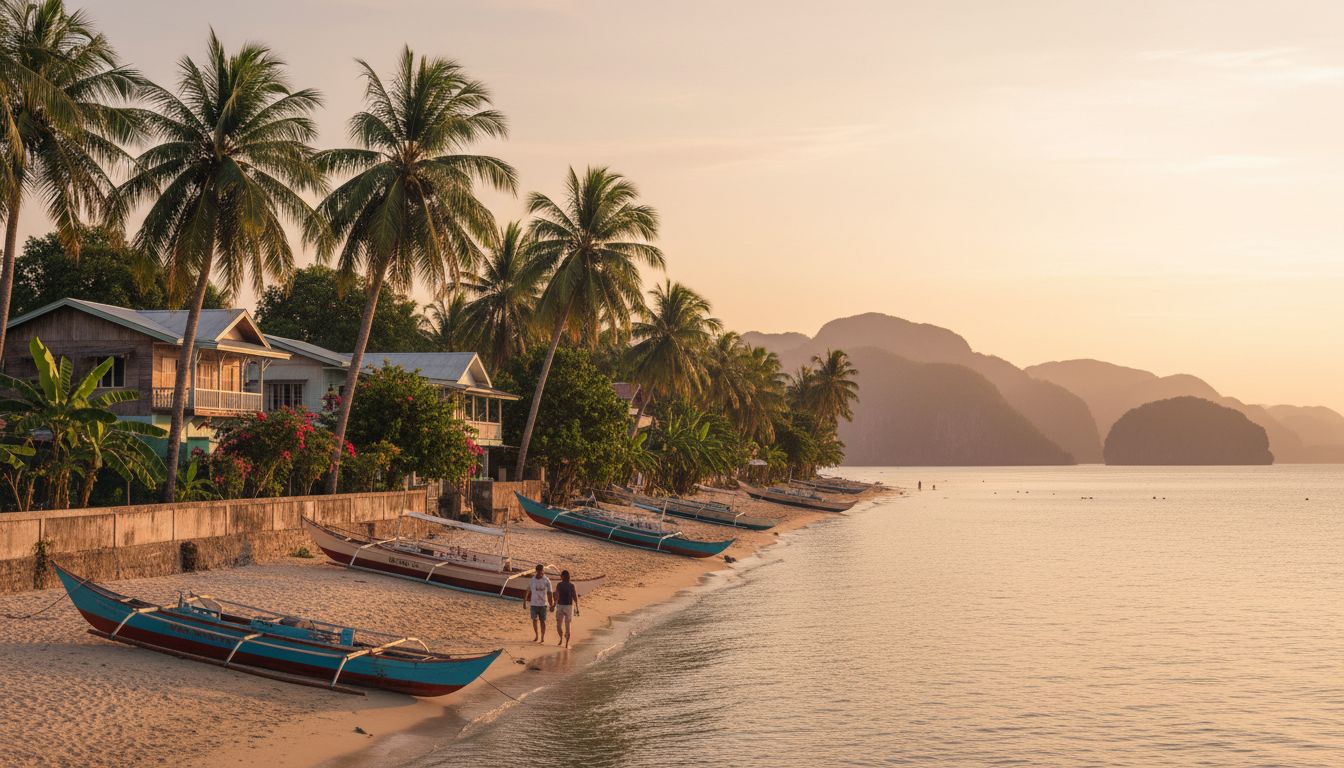
Philippines Retirement Visa (SRRV Classic)
The SRRV is permanent residency bought with a refundable bank deposit rather than earned through income, which makes it structurally different from every other route in this dataset. The Philippine Retirement Authority sets the deposit by age band and by whether you hold a pension, and the Bureau of Immigration issues the visa. The stay is indefinite with multiple entry, and — uniquely among the Asian long-stay routes we hold — it exempts the holder from needing a separate work or student permit.
Special Resident Retiree's Visa (SRRV Classic) at a glance ✓ Verified Aug 2026
- Income required
- $800/mo
- Visa cost
- $1500
- Official source: pra.gov.ph · Verified Aug 2026
Requirements
- Principal must be 40 or over. The visa deposit is set by age band AND pension status: 50+ pensioner USD 15,000 · 40–49 pensioner USD 25,000 · 50+ non-pensioner USD 30,000 · 40–49 non-pensioner USD 50,000.
- The pensioner tiers require proof of a LIFETIME pension of at least USD 800/month for a single applicant, or USD 1,000/month for an applicant with dependents.
- The deposit is a requisite dollar time deposit remitted from abroad into a PRA-accredited bank — it is refundable capital, not a fee, and under SRRV Classic it may be used for investment purposes allowed by the programme.
- PRA processing fee of USD 1,500, plus USD 300 for each joining dependent.
- PRA annual fee of USD 360 covering the principal plus two dependents, payable on joining and every year after, plus USD 100 for each dependent beyond two.
- Medical certificate and police clearance from the country of origin or residence, each issued within 6 months of submission.
- Bureau of Immigration Clearance Certificate. An NBI clearance is additionally required for anyone who has already stayed more than 90 days in the Philippines.
- Documents issued outside the Philippines must be in English and either apostilled or authenticated by a Philippine embassy or consulate.
- ⚠ Much lower deposits exist under SRRV Courtesy — USD 1,500 to USD 6,000 — but only for former Filipino citizens, and for retired diplomats, officers of DFA-recognised international organisations and retired military from countries with recognised bilateral relations. Most applicants do not qualify, and PRA's own table for the foreign-national Courtesy tier is laid out ambiguously enough that we are not restating its bands as fact.
How to apply
- Enter the Philippines on a tourist visa without restrictions, valid for at least one month while the SRRV is processed, and extend it if it expires mid-process.
- Choose a PRA-accredited bank. For a private bank you must first request a Letter of Introduction from PRA at [email protected].
- Remit the visa deposit from a bank abroad as an inward remittance, naming the SRRV deposit, the applicant and the passport number as the remittance purpose.
- Submit the PRA application form with passport, medical certificate, police clearance, BI clearance and eight 2x2 photographs, and pay the USD 1,500 processing fee.
- PRA endorses the approved application to the Bureau of Immigration, which issues the visa.
Renewal and long-term stay
- Renewable: yes
- Path to permanent residency: yes
Permanent residency is granted on issue rather than after a qualifying period, which is why no PR waiting time is recorded. There is no renewal cycle in the usual sense: the SRRV confers permanent residency with multiple entry and indefinite stay, and holders are exempt from the Bureau of Immigration's annual reporting and from the ACR I-Card. What recurs is the PRA annual fee — USD 360 for the principal plus two dependents. The status persists while the deposit is maintained and the fee is paid.
Applying: where and how
- Apply from outside the country: no — the application is made from inside the country
- Where you file: in person at an immigration office in-country
- Income requirement as published: USD 800/month lifetime pension (single applicant); USD 1,000/month with dependents
The figure most sites publish for this visa — a USD 10,000 deposit for a pensioner aged 50 or over — is out of date. PRA's own page now sets that applicant at USD 15,000, with the other three Classic tiers at USD 25,000, USD 30,000 and USD 50,000. Checked against pra.gov.ph on 2026-08-25. Two things make this route unusual rather than merely cheap. The deposit is refundable capital rather than a fee, so the real cost is the foregone return on it plus USD 1,500 up front and USD 360 a year. And the visa exempts the holder from needing a separate work or student permit — a retirement visa that does not prohibit working, which Thailand's O-A does outright. Applied for inside the Philippines on a tourist visa. The deposit must arrive as an inward remittance from a bank abroad, so the money moves internationally while the application itself is filed with PRA locally.
Bringing a partner or children
- Dependants: yes — a partner and children can be included
Spouse and unmarried children under 21 qualify, and can join on the initial application or be added after the principal's visa is approved. Each joining dependent costs USD 300 in application fees. Two dependents are covered by the principal's deposit; each dependent beyond two requires an additional USD 15,000 deposit, except for former Filipino citizens. The pension threshold also rises from USD 800 to USD 1,000 a month once you have dependents.
Tax
- Special nomad or expat tax regime: yes — see below
PRA publishes a specific set of exemptions and we record only those: SRRV holders are exempt from tax on pensions and annuities, from travel tax, and from customs duties on a one-time importation of household goods up to USD 7,000. ⚠ We have NOT verified how the Philippines taxes other foreign income for a resident alien, nor the day threshold at which residency attaches, so both fields are left blank rather than guessed. The pension exemption is not a general foreign-income exemption and must not be read as one.
This summarises published rules, not your situation, and it is not tax advice. Two things it can't tell you: your home country may tax you anyway — US citizens are taxed on worldwide income wherever they live — and day-count is only the most common trigger for tax residency, not the only one. Having a permanent home, a family or your centre of economic interests in a country can make you resident well before the day count does. Get advice before you move.
Moving abroad means more than the visa — sort your travel insurance (many visa applications require proof of coverage), set up borderless banking, and land with data working.
First nomad visa? Our digital nomad visa guide explains how qualifying, applying, and taxes work across every country.
Frequently asked questions
How much do you need to deposit for an SRRV?
It depends on your age and whether you hold a pension, and the figure most sites quote is out of date. PRA's current SRRV Classic tiers are USD 15,000 for a pensioner aged 50 or over, USD 25,000 for a pensioner aged 40–49, USD 30,000 for a non-pensioner aged 50 or over, and USD 50,000 for a non-pensioner aged 40–49. The pensioner tiers require proof of a lifetime pension of at least USD 800 a month, or USD 1,000 with dependents. The deposit is refundable capital held in a PRA-accredited bank, not a fee.
Can you work in the Philippines on an SRRV?
The SRRV exempts its holder from needing a separate work or student visa or permit, which is unusual — Thailand's O-A retirement visa prohibits employment outright. That exemption is published by PRA among the visa's benefits. It is a different question from whether a particular job or business also needs sector licensing, so take local advice on the specific work rather than treating the exemption as blanket permission.
Is the SRRV permanent residency?
Yes. PRA describes it as permanent residency with multiple entry and indefinite stay, and holders are exempt from the Bureau of Immigration's annual reporting and from the ACR I-Card. There is no renewal cycle. What recurs is the PRA annual fee — USD 360 for SRRV Classic covering the principal and two dependents — and the status persists while the deposit is maintained and the fee is paid.
What is the minimum age for the SRRV?
Forty. That is lower than most Asian retirement routes — Thailand's O-A starts at 50 — but the deposit is higher in the 40–49 band: USD 25,000 with a pension and USD 50,000 without, against USD 15,000 and USD 30,000 for applicants aged 50 and over.
Are there cheaper SRRV options?
Yes, under SRRV Courtesy, at USD 1,500 to USD 6,000 — but eligibility is narrow. It covers former Filipino citizens, retired diplomats, officers of international organisations recognised by the Philippine DFA, retired military from countries with recognised bilateral relations with the Philippines, and certain high achievers. Most applicants do not qualify, and PRA's own table for the foreign-national tiers is laid out ambiguously enough that we do not restate its exact bands here.
Other Philippines long-stay visas
Different visa, different rules. These are routinely confused with each other — check which one a source is describing before you trust a figure from it.
More visas in Asia
Indonesia
Remote Worker Visa (E33G KITAS)
Japan
Digital Nomad Visa
Malaysia
DE Rantau Nomad Pass
South Korea
Workation Visa (F-1-D)
Visa rules, income thresholds, and fees change — always confirm the current requirements on the official government source (linked here) before applying. This page is informational, not immigration advice. See how we verify this data — and tell us if something here is out of date.