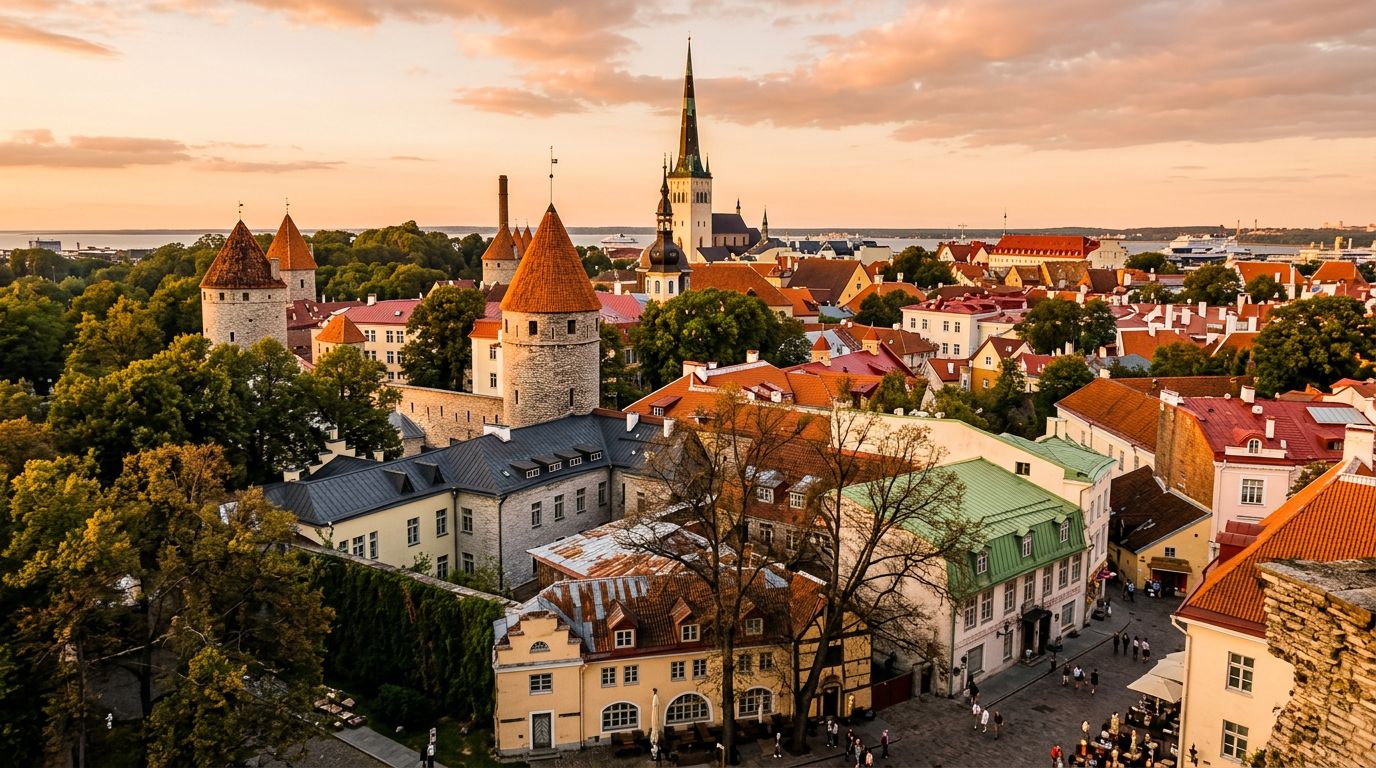
Estonia digital nomad visa
Estonia invented the digital nomad visa, and it remains the most digital-friendly bureaucracy in Europe — the same country that runs e-Residency. The income bar is on the higher side, but the process is clear, fast, and entirely English-friendly, with Tallinn's startup scene as the backdrop.
Digital Nomad Visa at a glance ✓ Verified Jul 2026
- Income required
- $4900/mo
- Visa cost
- $110
- Length of stay
- 12 months
- Processing
- 15–30 days
- Official source: politsei.ee · Verified Jul 2026
Requirements
- Remote work for employers or clients registered outside Estonia, or your own foreign company
- Gross monthly income above the official threshold (around €4,500) for the six months before applying
- Evidence of the work relationship: contracts, payslips, bank statements
- Valid travel/health insurance and accommodation plan
- Apply at an Estonian embassy or, in some cases, in-country
How to apply
- Confirm you clear the six-month income history at the published threshold
- Complete the online application form and book an appointment at the nearest Estonian embassy
- Submit documents and biometrics; pay the state fee
- Receive the D-visa — up to 12 months, with up to half the time usable across Schengen
Renewal and long-term stay
- Renewable: no — a single fixed term
- Path to permanent residency: no — time on this visa does not lead to residency
- Path to citizenship: no
Estonia's is a visa, not a residence permit — one year maximum, no extension, and time on it counts toward neither permanent residency nor citizenship. You can reapply after a spell outside Estonia. E-Residency is a separate thing entirely and grants no right to live here.
Applying: where and how
- Apply from outside the country: yes — apply before you travel
- Where you file: at an embassy or consulate
- Income requirement as published: reputable 2026 sources cite between €3,504 and €4,500 per month
Filed at an Estonian embassy or consulate. Two things to plan for. The income test looks backwards over six months rather than at a single payslip, so a recent jump in earnings won't carry an application on its own. And the threshold itself is genuinely disputed — 2026 sources cite figures from €3,504 to €4,500 per month, so confirm the current number with the Police and Border Guard Board before assembling statements.
Bringing a partner or children
- Dependants: yes — a partner and children can be included
Tax
- You become tax resident: after 183 days in the country
- Foreign income taxed locally: yes — taxed once you become tax resident
- Special nomad or expat tax regime: no — ordinary resident rates apply
No nomad-specific break: cross 183 days in any 12-month period and you are an Estonian tax resident, taxed on worldwide income at the flat 22% rate with a €700/month tax-free allowance. Below that threshold you generally aren't resident — which, given the visa maxes out at a year, makes the day count worth tracking deliberately rather than accidentally.
This summarises published rules, not your situation, and it is not tax advice. Two things it can't tell you: your home country may tax you anyway — US citizens are taxed on worldwide income wherever they live — and day-count is only the most common trigger for tax residency, not the only one. Having a permanent home, a family or your centre of economic interests in a country can make you resident well before the day count does. Get advice before you move.
Moving abroad means more than the visa — sort your travel insurance (many visa applications require proof of coverage), set up borderless banking, and land with data working.
First nomad visa? Our digital nomad visa guide explains how qualifying, applying, and taxes work across every country.
Frequently asked questions
Is Estonia's nomad visa connected to e-Residency?
They're separate things. e-Residency gives you a digital identity to run an Estonian company remotely — it grants no right to live in Estonia. The digital nomad visa is a physical-stay visa. Plenty of nomads combine both: an Estonian company via e-Residency, plus the visa when they want to live there.
Why is Estonia's income requirement so high?
The threshold tracks Estonian wage statistics and is rechecked periodically, and the country deliberately aims at established remote earners. If you're under it, Croatia and Colombia accept much lower incomes.
Does the Estonian visa lead to residency?
Not directly — it's a visa, not a residence permit, and it doesn't count toward permanent residency. For a path to staying in Europe long-term, Portugal and Spain are the stronger plays.
More visas in Europe
Albania
Unique Permit (Digital Nomad)
Croatia
Digital Nomad Residence Permit
Cyprus
Digital Nomad Visa
Czechia
Digital Nomad Programme
Visa rules, income thresholds, and fees change — always confirm the current requirements on the official government source (linked here) before applying. This page is informational, not immigration advice. See how we verify this data — and tell us if something here is out of date.