How to become a digital nomad
Becoming a digital nomad comes down to one thing first — income you can earn from anywhere — and then a stack of practical decisions: a visa that makes your stay legal, banking that works across borders, health cover that follows you, and a way to stay online the moment you land. This guide walks the whole path in order, without the hype.
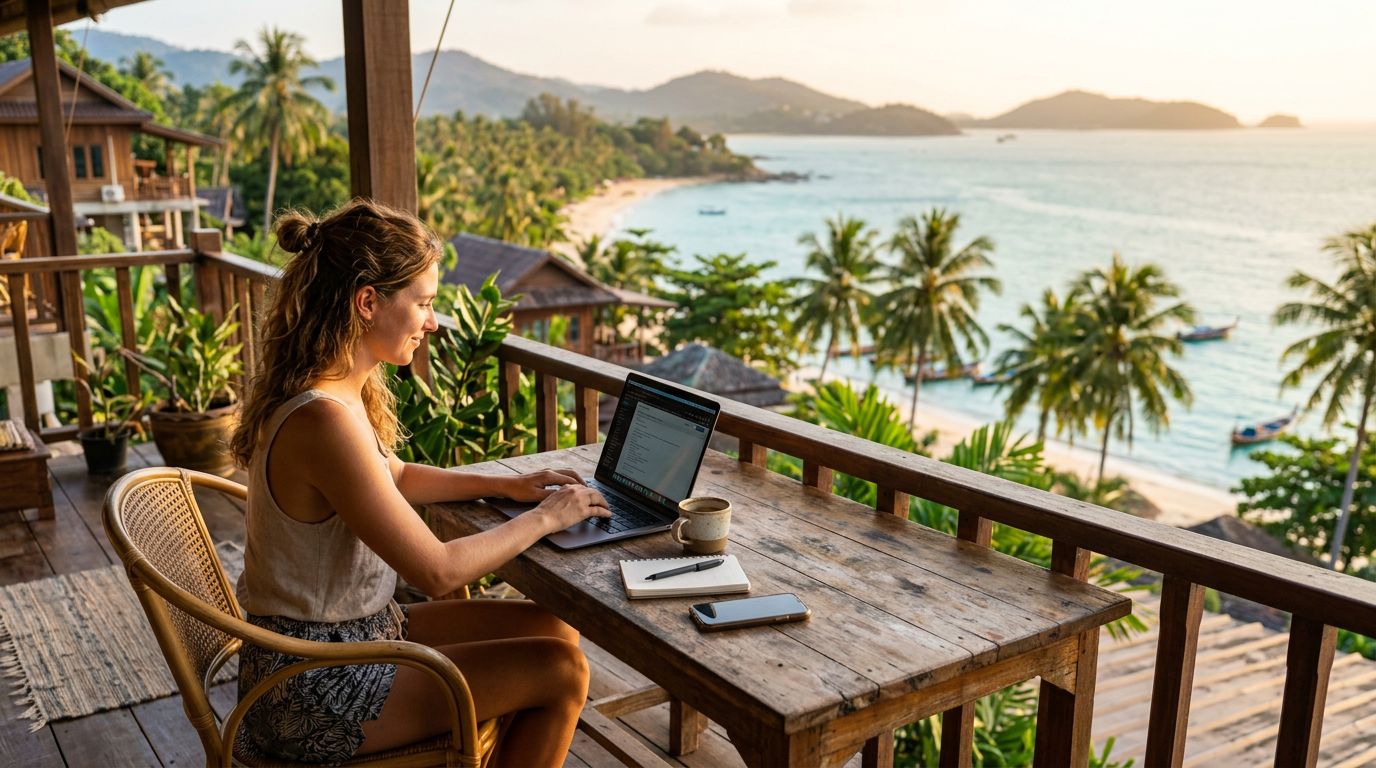
The short version
Get location-independent income before you leave. Decide how long you're staying and pick the right visa. Set up borderless banking, get nomad health insurance, and sort a travel eSIM so you land connected. Then choose an affordable first base, go for a few months, and adjust. Everything below is that sequence, in detail.
What a digital nomad actually is
A digital nomad earns a living online while living in different places, instead of being tied to one office or city. That's the whole definition — and it's worth being precise, because two things get confused with it. A nomad is not a tourist: the work is ongoing and the stays are usually longer. And a nomad is not the same as an expat, who relocates to one country and settles. Nomadism is movement plus remote income.
It's also not a permanent holiday. The freedom is real, but so is the admin — visas, taxes, healthcare, time zones, and the logistics of restarting your life every few months. People who thrive treat it as a lifestyle they actively run, not a vacation that runs itself.
Step 1 — Build location-independent income
This is the real gate, and almost everything else is logistics by comparison. Before you book anything, you need money that arrives whether you're in Lisbon or Chiang Mai. There are three realistic routes:
- Take your current job remote. The fastest path if you already have one — negotiate full remote, or a remote trial, before quitting. You keep your salary and skip the hardest part: finding clients.
- Freelance a remote skill. Writing, design, development, marketing, video, bookkeeping, virtual assistance. Build one or two clients on the side first, then scale as you go. Income is lumpier but you own it.
- Run a location-independent business. A product, agency, content site, or store. Highest ceiling, slowest to start, and not where most people begin.
The honest rule: don't leave on the plan of "figuring out income there." Have stable earnings, or a runway of three to six months plus a concrete plan, before you go. The dream ends early far more often from money than from any visa problem.
Step 2 — Sort your visa and legal stay
Once income is handled, the question is where you can legally be — and for how long. Short stays often fit visa-free entry or a tourist visa, but technically working on one sits in a legal grey area in most countries. For anything beyond a couple of months, a dedicated digital nomad visa is the clean answer: it grants legal residency, sets out the income you need to qualify, and usually clarifies how your foreign income is taxed.
More than 50 countries now offer one, with wildly different income thresholds and perks — from Portugal and Spain to Thailand, Costa Rica, and the UAE. We keep a fact-checked page per country with the current requirements, costs, and official sources: browse them all on our digital nomad visa pages and start with the country you're eyeing first.
Before you commit to a country
Check three numbers on its visa page: the minimum income to qualify, how long the visa lets you stay, and whether your foreign income is taxed locally. Those three decide whether a country is realistic for you faster than any "best places" list.
Step 3 — Set up borderless banking
Living across currencies breaks ordinary bank accounts. You'll get hit with foreign transaction fees, bad exchange rates, and cards that get blocked the moment they see a charge from a new country. The fix is a multi-currency account built for this: hold and spend in several currencies, get paid internationally, and convert at close to the real rate.
Set this up before you leave, while you still have a home address and easy ID verification. Our guide to the best bank account for digital nomads walks through the options, and if you're worried about losing access to your home bank, read opening a bank account abroad for how residency and proof-of-address actually work.
Step 4 — Get nomad health insurance
The moment you leave your home country, your domestic health cover usually stops following you. Regular travel insurance doesn't fit either — it assumes a short trip with a fixed return date. What you need is insurance designed for long-term, multi-country living that you can buy even after you've already left.
For most younger, healthy nomads, a travel-medical plan that covers emergencies and hospital stays is enough and stays cheap. If you've fully left your home health system and want routine care too, you'll want comprehensive cover instead. We break down both in our guides to the best travel insurance for digital nomads and nomad health insurance. Don't skip this one — a single hospital visit abroad costs more than years of premiums.
Step 5 — Stay connected anywhere
Your income depends on being online, so connectivity isn't optional. Carrier roaming is ruinously expensive, and hunting for a local SIM on arrival wastes the day you most need to be reachable. A travel eSIM solves it: install it before you fly and land with working data, at close to local prices, without swapping a physical SIM.
Buy one for your first destination before departure and you skip the airport-wifi scramble. Our guide to the best eSIM for travelers compares coverage, real data pricing, and tethering limits so you can work off your laptop too.
Step 6 — Pick your first base
Your first destination should be easy, not adventurous. Pick somewhere with a low cost of living, fast and reliable internet, an established nomad community, and a simple visa for your passport. That combination is why hubs like Chiang Mai, Bali, Lisbon, Mexico City, and Medellín keep showing up — the path is well-worn, so you spend energy on settling into the work, not on solving every problem alone.
Go for a few months, not a one-way leap. A first stint of two to three months tells you whether the lifestyle fits before you sell everything. Most people adjust their whole approach after the first base — slower travel, fewer destinations, more routine — and that's a sign it's working, not failing.
Common mistakes to avoid
- Leaving without stable income. The number-one reason people go home early. Income first, flights second.
- Moving too fast. A new city every week is exhausting and expensive. Slow travel is cheaper, less stressful, and where the lifestyle actually gets good.
- Ignoring the boring admin. Visas, taxes, and insurance aren't optional — the people who handle them upfront are the ones still doing this in five years.
- Skipping insurance to save money. One accident erases years of savings. It's the cheapest expensive mistake to avoid.
- Underestimating loneliness. Build into communities and coworking spaces from day one. It's a skill, not a given.
Your next steps
Income sorted? Work through the setup in order:
- 1. Find a visa for the country you want to start in.
- 2. Open a borderless bank account before you go.
- 3. Get nomad insurance that covers you abroad.
- 4. Set up a travel eSIM so you land connected.
Frequently asked questions
Enough to cover three to six months of living costs as a buffer, plus your flights and setup gear. In affordable hubs like Southeast Asia or parts of Latin America, $1,200–$2,000/month covers a comfortable life; Western Europe or major cities run far higher. The bigger requirement isn't savings — it's location-independent income you can rely on before you leave.
It depends on how long you stay and where. Short stays often fit a tourist visa or visa-free entry, but working on one is a legal grey area in many countries. For stays beyond a few months, a dedicated digital nomad visa gives you legal residency and clear tax rules. Over 50 countries now offer one — see our visa pages for the requirements per country.
Yes, but income comes first. The realistic path is to build a remote-friendly skill — writing, design, development, marketing, virtual assistance — or negotiate remote work in your current job, then go. Leaving without stable income and planning to 'figure it out there' is the most common way the dream ends early.
For people who value freedom and novelty over routine and proximity to family, yes — it can be life-changing and, in cheaper countries, cheaper than living back home. But it trades stability for logistics: visas, taxes, healthcare, and loneliness are real work. It's a lifestyle, not a permanent vacation.
Most stay tax residents of their home country until they deliberately establish residency elsewhere, and they still file at home. Some countries' nomad visas exempt foreign income from local tax; others don't. Tax depends on your citizenship, where you spend time, and your income source — it's the one area worth paying a cross-border accountant to get right.
Visa rules, income thresholds, and provider terms change — always confirm current details on official and provider sites before acting. This guide is informational, not legal or financial advice.