What is an eSIM and how does it work?
An eSIM is a SIM card built into your phone that you activate by downloading a plan instead of inserting a physical card. For a digital nomad it means buying local data before you land, scanning a QR code to install it, and switching networks between countries without ever swapping a tiny piece of plastic.
The short answer
An eSIM is a built-in, software-programmed SIM. You buy a plan (Airalo, Holafly), scan a QR code to install it — often before you fly — and switch it on when you land. See which plans are best on our best eSIM guide.
How an eSIM works
An eSIM (embedded SIM) is a small chip soldered into your phone that does everything a plastic SIM does, but is programmed by software. Instead of slotting in a card, you download a mobile plan onto it — the network's details are written to the chip. Modern phones can store several eSIM profiles at once and switch between them, which is what lets you carry data plans for multiple countries and flip between them in settings.
Setting one up as a nomad
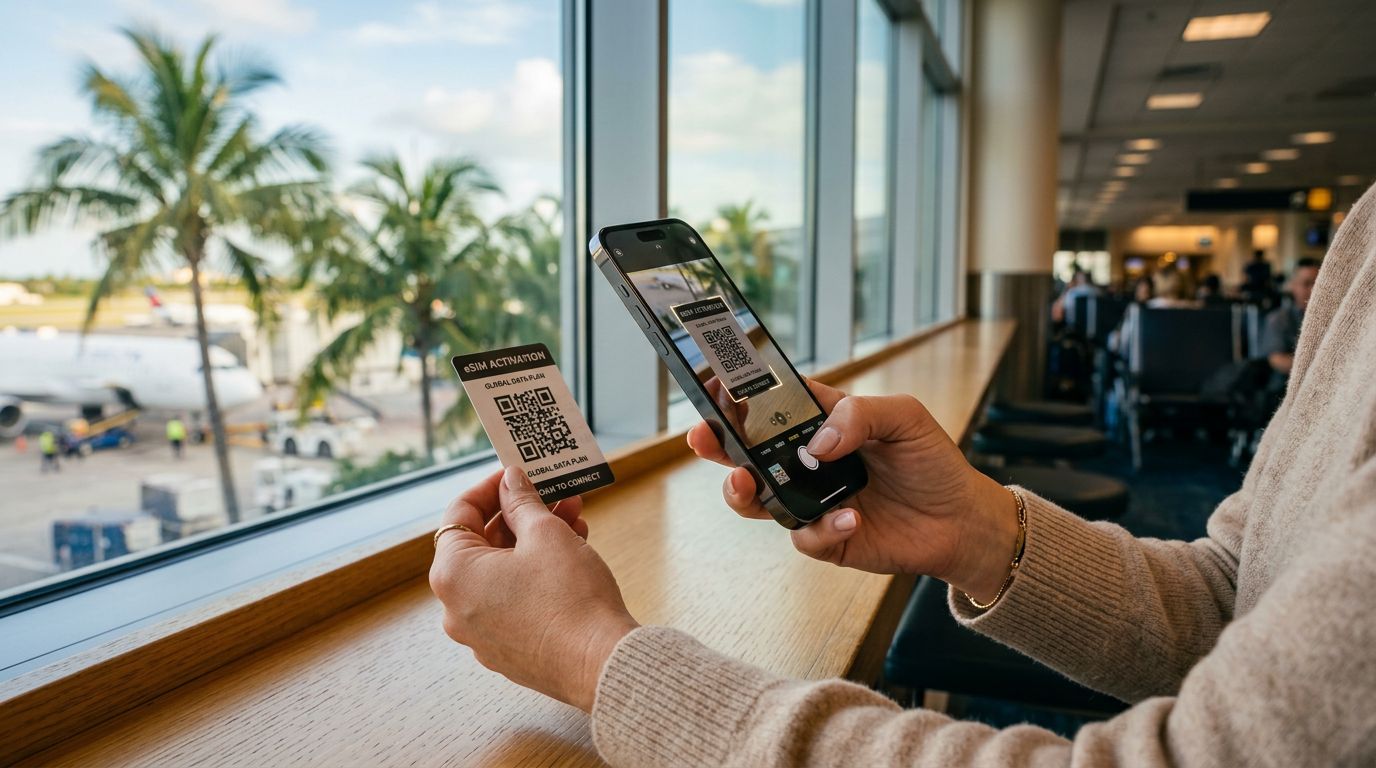
The flow is quick: buy a plan from a provider like Airalo or Holafly, receive a QR code, and scan it in your phone's mobile-data settings to install the profile — usually while you're still at home on Wi-Fi. When you land, you switch that eSIM on and it connects to a local network automatically, so you have data before you leave the airport. No SIM shop, no queue, no language barrier. Compare the providers on our best eSIM guide.
Does your phone support it?
Most flagship phones from 2019 onward do — recent iPhones, Google Pixels, and Samsung Galaxy S and Note models. The quickest test is your settings: if you can "add a mobile plan" by QR code, you're set. A few regional model variants disable eSIM, so confirm your exact model first. And because phones are dual-SIM, you can keep your home SIM in for calls while the eSIM handles data — more on that in does an eSIM use your home number.
Frequently asked questions
An eSIM (embedded SIM) is a small chip built into your phone that does the job of a physical SIM card but is programmed by software. Instead of inserting a plastic card, you download a mobile plan onto it, usually by scanning a QR code. Most phones from the last few years support several eSIM profiles at once.
You buy a plan from a provider like Airalo or Holafly, receive a QR code, and scan it in your phone's mobile-data settings to install the profile — often before you even leave home. When you arrive, you switch that eSIM on and it connects to a local network automatically. The whole process takes a couple of minutes and needs an internet connection to install.
Most flagship phones from 2019 onward do — recent iPhones, Google Pixels, and Samsung Galaxy S and Note models included. The quickest check is your settings: if you can 'add a mobile/cellular plan' via QR code, you have eSIM support. A few regional model variants disable it, so confirm your specific model before relying on it.
Yes. Most modern phones are dual-SIM, so you keep your home SIM active for calls and texts on your normal number while a travel eSIM handles data abroad. You just set the travel eSIM as your data line and leave the home line for essential calls — watching roaming charges on that home line.
Ready to get connected?
Now that you know how eSIMs work, see which providers give the best coverage and data pricing for where you're headed.
Device support, plans, and coverage change over time — confirm current details with the provider before buying. This page is informational.