What is a multi-currency account?
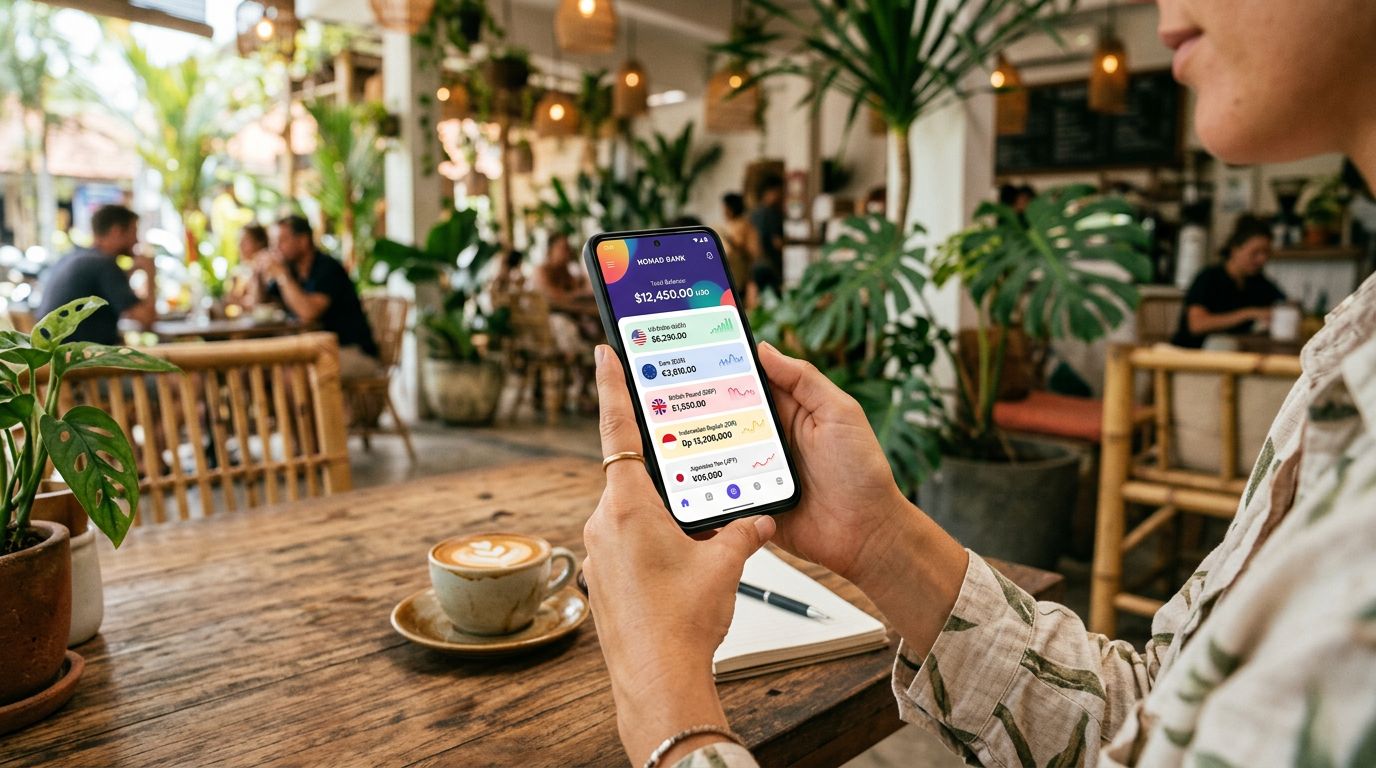
A multi-currency account lets you hold and convert several currencies in one place at the real mid-market rate, and usually gives you local account details in each region — a US routing number, a UK sort code, a euro IBAN — so you can spend and get paid like a local anywhere. It's the single most useful banking tool for a digital nomad.
The short answer
It's an account (Wise, Revolut) that holds multiple currencies, converts at the real rate, and gives you local details to receive money like a local. See how the main options stack up on our best bank account guide.
What it actually does
Three things. It holds balances in several currencies at once, so you can keep dollars, euros, and pounds side by side. It converts between them at the mid-market rate — the real rate you see on Google — with a small, visible fee. And it gives you local account details in major regions, so a client or employer can pay you as if you were a local, which is the heart of getting paid as a nomad.
Is it a real bank account?
Often not in the traditional sense. Wise and Revolut are regulated e-money institutions, not banks, so your balance is safeguarded rather than covered by a deposit- insurance scheme. That's fine for spending and holding working balances, but it's why most nomads keep a genuine bank account alongside for larger savings. Think of a multi-currency account as your operating account, not your vault.
Why nomads rely on it
A normal card charges a fee and a marked-up rate every time you spend abroad. A multi-currency account lets you convert once at the real rate, hold the local currency, and then spend with no per-transaction markup — while also receiving income in multiple currencies. That combination is why it anchors almost every nomad money setup, as covered in how to manage money as a digital nomad.
Frequently asked questions
It's an account that lets you hold balances in several currencies at once and convert between them at the mid-market rate. Providers like Wise and Revolut also give you local account details — for example a US routing number, a UK sort code, and a euro IBAN — so you can receive money like a local in each region. It's the single most useful banking tool for a nomad.
Not always in the traditional sense. Wise and Revolut are regulated e-money institutions rather than banks, so balances are safeguarded rather than covered by deposit-insurance schemes. That's fine for day-to-day spending and holding working balances, but for large savings most nomads keep a genuine bank account alongside it.
A normal bank card usually charges a foreign-transaction fee and converts at a marked-up rate every time you spend abroad. A multi-currency account lets you hold the local currency directly, convert once at the real rate, and then spend with no per-transaction markup — plus receive payments in multiple currencies, which a standard account can't do.
Wise and Revolut are the two most-used. Wise is strongest for cheap, transparent conversions and getting paid in many currencies; Revolut adds budgeting features and a slick app with tiered plans. Many nomads use both. We compare them on our best bank account for digital nomads page.
Pick your multi-currency account
Wise and Revolut are the two nomads reach for. See how they compare on fees, rates, and features before you open one.
Fees, rates, and account terms change over time — always confirm current details on the provider's site before signing up. This page is informational, not financial advice.