The best way to get cash abroad
The best way to get cash abroad is a bank ATM using a card with no foreign-transaction fee and mid-market conversion — decline the machine's offer to convert to your home currency, and take out larger amounts less often to spread the flat fee. That beats exchange kiosks and airport counters every time.
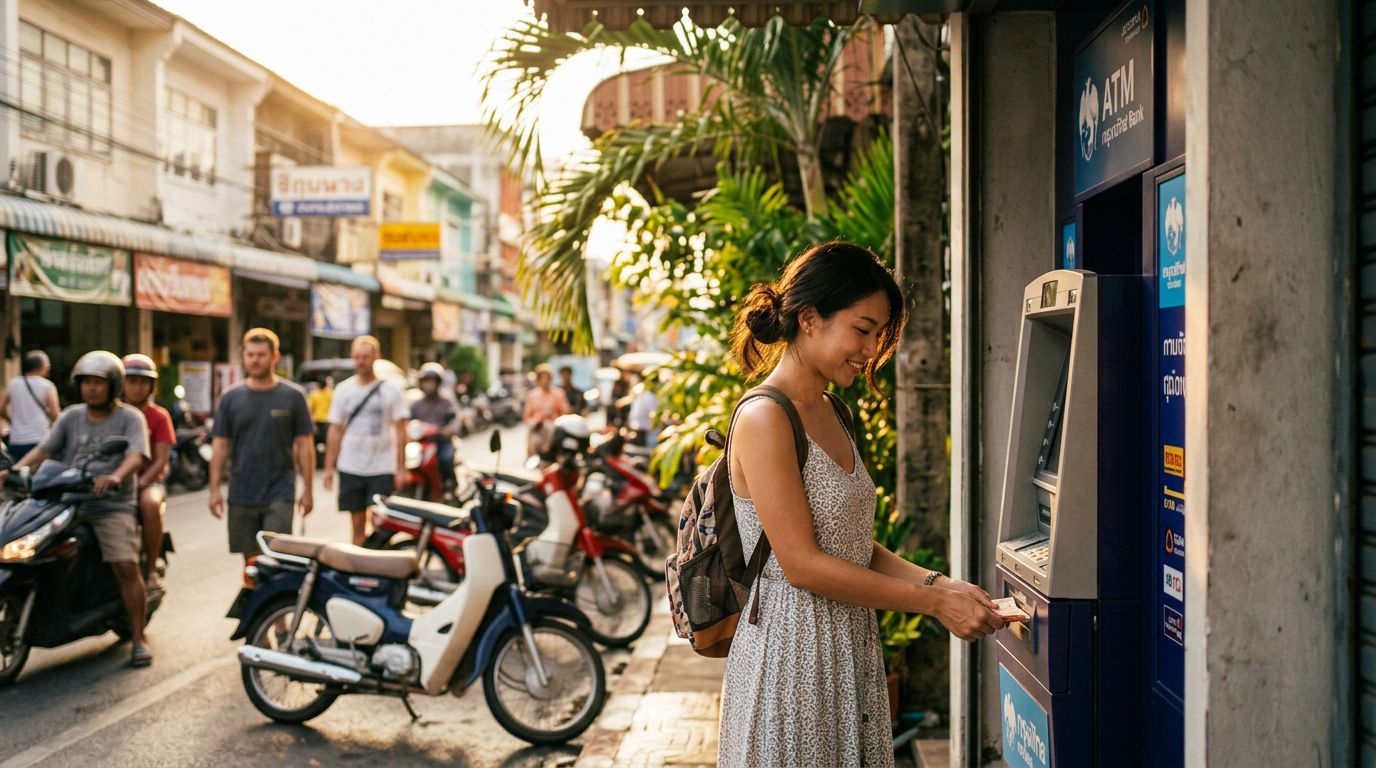
The short answer
Use a bank ATM with a fee-free card (Wise or Revolut), always choose the local currency, and withdraw larger amounts within your account's monthly fee-free limit. See which accounts do this on our best bank account guide.
Use bank ATMs, not exchange kiosks
A bank-branded ATM paired with a fee-free card is almost always the cheapest way to get local cash. Currency-exchange kiosks and airport counters bake in poor rates and commission, and standalone ATMs in tourist areas often add steep surcharges. Stick to machines attached to real banks, and if a screen warns of its own fee before you confirm, cancel and find another.
Decline the currency conversion
Foreign ATMs love to ask if you'd like to be charged in your home currency. Always decline and choose the local currency — the machine's conversion (Dynamic Currency Conversion) is several percent worse than your own card's rate. This is the same trap as at card terminals, covered in avoiding foreign transaction fees, and it applies just as much to cash.
Withdraw larger amounts, less often
Many ATMs and accounts charge a flat fee per withdrawal or cap fee-free withdrawals per month. Fewer, larger withdrawals cost less in fees than a string of small ones — balanced against how much cash you're comfortable carrying. Check your provider's monthly fee-free limit (accounts like Revolut and Wise both have one), and split cash between your wallet and a secure spot at your accommodation.
Frequently asked questions
A bank ATM using a card with no foreign-transaction fee and mid-market conversion, declining the machine's own currency-conversion offer. This beats currency-exchange kiosks and paying by card in many cash-first countries. Stick to ATMs attached to real banks rather than standalone machines in tourist areas, which often add high surcharges.
Enough to cover several days to a couple of weeks, balanced against how much you're comfortable carrying. Many ATMs charge a flat fee per withdrawal, so fewer, larger withdrawals cost less in fees than frequent small ones — but don't carry more than you'd be willing to lose. Split cash between your wallet and a secure spot at your accommodation.
No — always choose to be charged in the local currency. The 'convert for you' option (Dynamic Currency Conversion) uses the machine operator's inflated rate, typically several percent worse than your own card's. Declining it lets your bank or Wise/Revolut convert at a far better rate.
Often, yes. Accounts like Revolut and Wise give a set amount of fee-free ATM withdrawals per month, then charge a small percentage above it. Check your provider's limit and plan larger withdrawals around it, especially in cash-heavy countries where you'll use ATMs more.
Get the right card first
Cheap cash abroad starts with a fee-free card and good ATM limits. Compare the accounts nomads use for exactly this.
Fees, rates, and ATM limits change over time — always confirm current details on the provider's site before relying on them. This page is informational, not financial advice.